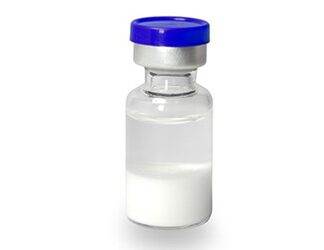
GHK-Cu 50mg (Copper Peptide)
Size: 50mg | 99% Purity
M.Wt: 403.91
Formula: C14H23CuN6O4
Solubility: H2O
Purity: >99%
Storage: -20°C / 3 years
Half life: Not established
CAS No.: 89030-95-5
| Purity (HPLC) | >99% |
|---|---|
| Molecular weight | 403.91 g/mol |
| Molecular formula | C14H23CuN6O4 |
| CAS number | 89030-95-5 |
| Synonyms | GHK-Cu, Copper peptide GHK, Glycyl-L-histidyl-L-lysine copper |
| Solubility | H2O |
| Storage | -20°C / 3 years |
Peptide sequence
Gly-His-LysResearch reference: View mechanism, literature and identifier graph →
Reconstitution calculator (pre-filled for 50 mg)
Back-in-stock notification
Out of stock. Leave your email and we will notify you when it returns.
HPLC and MS verified by UKAS-accredited laboratories.
Free on orders over £50. Next-day upgrade available.
COA and batch number on every vial.
GHK-Cu 50mg (Copper Peptide) — research reference material
GHK-Cu 50mg (Copper Peptide) is supplied by NMChem as a research reference material in a 50mg presentation. Compound class: Tripeptide-copper complex · regenerative peptide, characterised in the literature as a copper peptide. It is supplied strictly for in-vitro laboratory research and is not for human or veterinary use.
Research context
Copper peptide; studied in skin remodelling, collagen, wound healing. Full mechanism detail, the identifier graph and selected peer-reviewed literature are set out on our GHK-Cu research reference. Related compounds in the same research area: AHK-Cu, SNAP-8, KPV. You can also compare it side by side on our comparison tool.
Presentation
This listing is the 50mg presentation at >99% stated purity, catalogue reference CU50. The same compound is also listed in a different presentation: GLOW Peptide Blend 70mg (BPC-157 + GHK-Cu + TB-500).
Identifiers
- CAS number: 89030-95-5
- Molecular formula: C14H23CuN6O4
- Molecular weight: 403.91 g/mol
- Synonyms: GHK-Cu, Copper peptide GHK, Glycyl-L-histidyl-L-lysine copper
- Class: Tripeptide-copper complex · regenerative peptide
Format & quality
Supplied as 50mg at >99% purity. Identity and purity are characterised by reversed-phase HPLC and mass spectrometry, with a per-batch Certificate of Analysis available on request. This item is a lyophilised powder and requires reconstitution before use; bacteriostatic water is supplied separately, and our reconstitution guide covers volumes and concentrations. Solubility: H2O.
Storage
Store at -20°C, protected from light. Stated shelf life 3 years from date of manufacture. Always confirm against the Certificate of Analysis supplied with your batch.
Research use only — not for human or veterinary use, food, cosmetic or therapeutic application. NMChem supplies this item as a laboratory reference material; no dosing or administration guidance is provided.
Frequently asked questions
What is GHK-Cu 50mg (Copper Peptide)?
Tripeptide-copper complex · regenerative peptide. Copper peptide; studied in skin remodelling, collagen, wound healing. NMChem supplies it as a research reference material only.
What is the CAS number for GHK-Cu 50mg (Copper Peptide)?
89030-95-5. Molecular formula C14H23CuN6O4. Molecular weight 403.91 g/mol.
How should GHK-Cu 50mg (Copper Peptide) be stored?
At -20°C, protected from light, with a stated shelf life of 3 years. The batch Certificate of Analysis is the controlling document.
Certificate of Analysis
Reconstitution
For peptides supplied as lyophilised powder, reconstitute in bacteriostatic water or sterile saline at the concentration appropriate to your protocol. Allow the vial to come to room temperature before opening, add solvent slowly down the inside wall (do not directly onto the powder), and gently invert until clear. Do not vortex.
Reconstituted solutions are typically stable at 2–8°C for the durations published in the corresponding peer-reviewed reference. For long-term storage, aliquot and freeze at −20°C; avoid repeated freeze–thaw cycles.
Research literature
Selected peer-reviewed publications from PubMed referencing this compound. Provided for research orientation — not an endorsement of any clinical application. Each citation links to the canonical PubMed record.
-
Regenerative and Protective Actions of the GHK-Cu Peptide in the Light of the New Gene Data.
Pickart L et al. · International journal of molecular sciences · 2018
PubMed PMID 29986520 -
The potential of GHK as an anti-aging peptide.
Dou Y et al. · Aging pathobiology and therapeutics · 2020
PubMed PMID 35083444 -
Topically applied GHK as an anti-wrinkle peptide: Advantages, problems and prospective.
Mortazavi SM et al. · BioImpacts : BI · 2025
PubMed PMID 39963574
You may also need