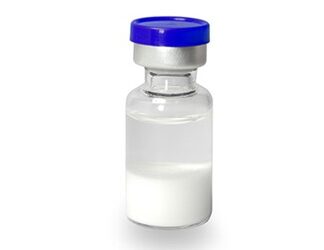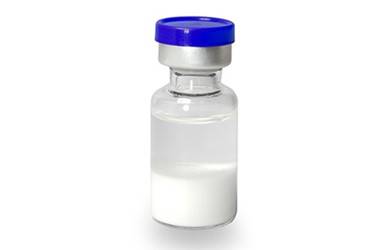
KLOW Blend 80mg
Size: 80mg | 99% Purity
Solubility: H2O
Purity: >99%
Storage: -20°C / 3 years
| Purity (HPLC) | >99% |
|---|---|
| Synonyms | KLOW, KLOW Blend |
| Solubility | H2O |
| Storage | -20°C / 3 years |
Only 1 left in stock
HPLC and MS verified by UKAS-accredited laboratories.
Free on orders over £50. Next-day upgrade available.
COA and batch number on every vial.
KLOW is a four-component lyophilised research blend supplying 80 mg total across four peptides that are studied in tissue-remodelling and inflammatory-signalling research. Unlike most blends on the market, its composition is stated here in full.
Composition
| Component | Mass | Share | Reference |
|---|---|---|---|
| GHK-Cu (copper tripeptide-1) | 50 mg | 62.5% | GHK-Cu research page |
| KPV (Lys-Pro-Val) | 10 mg | 12.5% | KPV research page |
| BPC-157 | 10 mg | 12.5% | BPC-157 research page |
| TB-500 (thymosin β-4 fragment) | 10 mg | 12.5% | TB-500 research page |
The ratio is 5 : 1 : 1 : 1. GHK-Cu is the dominant component by a wide margin, so the 80 mg headline figure is mostly GHK-Cu — worth knowing before comparing this against a single-compound listing on price per milligram.
The four components
- GHK-Cu — the tripeptide glycyl-L-histidyl-L-lysine complexed with copper(II). It is a metal complex rather than a plain peptide, which makes it the analytically distinctive component: it carries a visible blue colour, absorbs differently from the other three, and its copper content is established by a separate assay rather than by the peptide analysis.
- KPV — a tripeptide corresponding to the C-terminal fragment of α-melanocyte-stimulating hormone (residues 11–13), studied in inflammatory-signalling research. Related to the melanocortin compounds by origin, but a far smaller molecule.
- BPC-157 — a 15-residue pentadecapeptide, molecular weight 1,419.55, CAS 137525-51-0. The largest component in the blend by mass.
- TB-500 — a short synthetic fragment of thymosin β-4, not the full 43-residue protein. The distinction matters when comparing against literature, which is usually written about the intact protein.
Why this blend is unusually easy to verify
The four components span roughly 340 Da to 1,420 Da and differ markedly in hydrophobicity. On reversed-phase HPLC they elute well apart rather than crowding together, so a competent chromatogram resolves all four as separate peaks and each can be confirmed individually by mass spectrometry.
That is not true of every blend. Where components are close in mass and polarity they co-elute, and a single merged peak can be integrated as though it were one substance — the failure mode described in what HPLC purity actually means. When you request the Certificate of Analysis for your batch, the thing to look for here is four resolved peaks with four mass confirmations, not one combined purity figure. Identity vs purity covers why both measurements are needed per component, and red flags on a peptide COA covers what a single combined number for a mixture is failing to tell you.
Presentation
Lyophilised powder, 80 mg total, SKU KLOW80. Because the components have four different molecular weights, there is no single molecular weight or CAS number for the preparation — the specification records it per component. Deriving a molar concentration for any one component requires that component’s own mass and molecular weight, not the 80 mg total; see molar mass and solution concentration, which also covers why the nominal weight overstates the peptide actually present.
Documentation
A Certificate of Analysis is produced per batch and is available on request against the lot number printed on the vial. For a four-component preparation the report should state the breakdown as well as the analysis. If you have not read one of these before, how to read a Certificate of Analysis walks through each section, and batch numbers and traceability explains why the lot number is the part that makes the document mean anything.
Handling
Supplied lyophilised. Allow the sealed vial to reach room temperature before opening so atmospheric moisture does not condense onto cold glass, add solvent slowly down the vial wall rather than directly onto the cake, and dissolve without vortexing. Store dry at −20 °C protected from light; aliquot reconstituted stock before freezing so no portion is thawed more than once. Storage and stability covers the degradation routes these steps guard against — note that with four components present, each degrades on its own timetable. Procedure is in the reconstitution guide; where a reconstituted stock will be entered more than once see bacteriostatic water.
Related listings: the individual components are stocked separately, and the comparison tool sets them side by side. Why peptide prices vary covers how to compare a blend against buying components individually.
Research use only. Supplied for in-vitro research and laboratory use. Not for human or veterinary use, not a medicine, and not for food or cosmetic application. See the compliance page for the framework NMChem operates under.
Certificate of Analysis
Reconstitution
For peptides supplied as lyophilised powder, reconstitute in bacteriostatic water or sterile saline at the concentration appropriate to your protocol. Allow the vial to come to room temperature before opening, add solvent slowly down the inside wall (do not directly onto the powder), and gently invert until clear. Do not vortex.
Reconstituted solutions are typically stable at 2–8°C for the durations published in the corresponding peer-reviewed reference. For long-term storage, aliquot and freeze at −20°C; avoid repeated freeze–thaw cycles.
You may also need
Related compounds