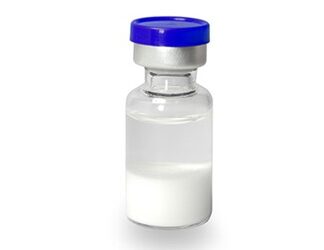
Lipo-C MIC Lipotropic Blend 10ml
Size: 10ml | 99% Purity
M.Wt: Mixed
Formula: Methionine / Inositol / Choline / L-Carnitine
Solubility: H2O
Purity: >99%
Storage: -20°C / 3 years
Half life: Variable per component
CAS No.: N/A (multi-component)
| Available sizes | 0.05kg |
|---|---|
| Purity (HPLC) | >99% |
| Molecular weight | Mixed g/mol |
| Molecular formula | Methionine / Inositol / Choline / L-Carnitine |
| CAS number | N/A (multi-component) |
| Synonyms | MIC Blend, Lipotropic Injection Solution, MCIC Blend |
| Solubility | H2O |
| Storage | -20°C / 3 years |
| Half-life | Variable per component |
Peptide sequence
N/AOnly 10 left in stock
HPLC and MS verified by UKAS-accredited laboratories.
Free on orders over £50. Next-day upgrade available.
COA and batch number on every vial.
Lipo-C (also written MIC) is a multi-component solution combining methionine, inositol, choline and L-carnitine. The four components are grouped together because each appears in the literature on lipid handling and one-carbon metabolism, and they are studied as a combination rather than as a single active substance.
- Methionine — an essential sulfur-containing amino acid and the entry point to the one-carbon / transmethylation pathway.
- Inositol — a carbocyclic sugar, precursor to the phosphatidylinositol second-messenger system.
- Choline — a quaternary ammonium nutrient, precursor to phosphatidylcholine and acetylcholine.
- L-carnitine — a quaternary ammonium compound involved in transporting long-chain fatty acids into mitochondria. NMChem also lists it as a single compound with a research reference page.
Presentation
10 ml sterile solution, SKU LIPC10. Because the preparation is multi-component, the specification records the formula as methionine / inositol / choline / L-carnitine rather than a single molecular formula, and no single CAS number applies.
Multi-component preparations are analytically different from single compounds: there is no single molecular weight, no single CAS number, and a purity figure has to be read per component rather than as one number for the vial. That is worth understanding before comparing blends between suppliers — what HPLC purity actually means covers why a single headline percentage carries less information here than it does for a single-compound product.
Documentation
A Certificate of Analysis is produced per batch and is available on request against the lot number printed on the vial. For a blend, the report states the component breakdown alongside the analysis of the finished solution. If you have not worked with this kind of report before, how to read a Certificate of Analysis walks through each section, and identity vs purity explains why the two headline numbers answer different questions.
Handling
Supplied ready in solution, so the reconstitution step does not apply — but the shelf life of a liquid presentation is governed by different chemistry from a lyophilised powder. Lyophilised powder vs pre-mixed solutions sets out what each format trades away, and storage and stability covers the degradation routes that operate once material is in aqueous solution.
Research use only. Supplied for in-vitro research and laboratory use. Not for human or veterinary use, not a medicine, and not for food or cosmetic application. See the compliance page for the framework NMChem operates under.
Certificate of Analysis
Reconstitution
For peptides supplied as lyophilised powder, reconstitute in bacteriostatic water or sterile saline at the concentration appropriate to your protocol. Allow the vial to come to room temperature before opening, add solvent slowly down the inside wall (do not directly onto the powder), and gently invert until clear. Do not vortex.
Reconstituted solutions are typically stable at 2–8°C for the durations published in the corresponding peer-reviewed reference. For long-term storage, aliquot and freeze at −20°C; avoid repeated freeze–thaw cycles.
You may also need
Related compounds