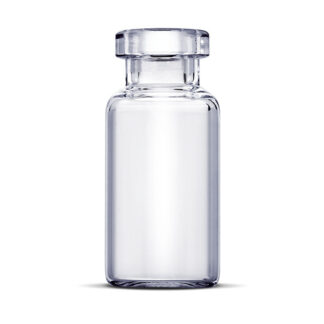
Bacteriostatic Water (BAC Water)
Size: 3ml | USP Grade Purity
M.Wt: 18.02
Formula: H2O
Solubility: N/A
Purity: >USP Grade
Storage: Room temperature / 3 years unopened
Half life: N/A
CAS No.: 7732-18-5
| Available sizes | 3ml · 10ml |
|---|---|
| Purity (HPLC) | USP Grade |
| Molecular weight | 18.02 g/mol |
| Molecular formula | H2O |
| CAS number | 7732-18-5 |
| Synonyms | BAC Water, Sterile Bacteriostatic Water, 0.9% Benzyl Alcohol Water |
| Solubility | N/A |
| Storage | Room temperature / 3 years unopened |
| Half-life | N/A |
Peptide sequence
N/A★ Bestseller
HPLC and MS verified by UKAS-accredited laboratories.
Free on orders over £50. Next-day upgrade available.
COA and batch number on every vial.
Sterile water containing approximately 0.9% benzyl alcohol as a preservative, supplied for laboratory reconstitution work. The preservative is the entire difference from plain sterile water, and it exists for one specific purpose: it allows a container to be entered more than once without organisms introduced at each entry establishing a population.
Benzyl alcohol is bacteriostatic rather than bactericidal — it inhibits multiplication rather than killing an established population. It does not sterilise a contaminated solution and it does not compensate for poor technique.
What it does not do
It has no effect on the chemical stability of a dissolved peptide. Oxidation, deamidation, hydrolysis and aggregation all proceed at the same rate as they would in plain water; those routes are governed by temperature, pH, concentration and sequence. A reconstituted stock in bacteriostatic water still has the same chemical working life it would otherwise have.
Two further considerations: benzyl alcohol absorbs in the UV and will appear as a peak if reconstituted material is re-analysed by HPLC, and it has measurable effects on membrane fluidity, so carried-over concentration should be calculated rather than assumed negligible where a stock is diluted into a cell-based system. Bacteriostatic water explained covers both in full, including when preservative-free water is the better choice.
Presentation
3 ml, USP grade, SKU BACW3. Water: CAS 7732-18-5, molecular weight 18.02. Store at room temperature; the multi-use window runs from first puncture rather than from purchase, so it is worth recording that date on the vial.
Related: acetic acid for sequences that will not dissolve in neutral water, and the reconstitution guide.
Research use only. Supplied for in-vitro research and laboratory use. Not for human or veterinary use, not a medicine, and not for food or cosmetic application. See the compliance page for the framework NMChem operates under.
Certificate of Analysis
Reconstitution
For peptides supplied as lyophilised powder, reconstitute in bacteriostatic water or sterile saline at the concentration appropriate to your protocol. Allow the vial to come to room temperature before opening, add solvent slowly down the inside wall (do not directly onto the powder), and gently invert until clear. Do not vortex.
Reconstituted solutions are typically stable at 2–8°C for the durations published in the corresponding peer-reviewed reference. For long-term storage, aliquot and freeze at −20°C; avoid repeated freeze–thaw cycles.
Research literature
Selected peer-reviewed publications from PubMed referencing this compound. Provided for research orientation — not an endorsement of any clinical application. Each citation links to the canonical PubMed record.
-
GAC to BAC: Does it make chloraminated drinking water safer?
Cuthbertson AA et al. · Water research · 2020
PubMed PMID 32004911 -
Co-occurrence of odor-causing dioxanes and dioxolanes with bis(2-chloro-1-methylethyl) ether in Huangpu River source water and fates in O
Wang C et al. · Journal of hazardous materials · 2022
PubMed PMID 35183052 -
Pilot-scale and mechanistic study of the degradation of typical odors and organic compounds in drinking water by a combined UV/H
Jiang Q et al. · Chemosphere · 2022
PubMed PMID 34982966
You may also need
Related compounds